A step-by-step, no-jargon guide to building a service or product website using AI tools like Claude, ChatGPT, and Gemini from first idea to a live site.
Quick Answer
You can build a working website using AI in four steps: describe your website in plain language to an AI tool like Claude or ChatGPT, let it generate the code and show you a live preview, refine it by asking for conversational changes, then publish it using a hosting platform.
No prior coding knowledge is required for a first version coding knowledge helps only when you want deeper customization later.
The rest of this guide breaks each step down clearly, with no unnecessary jargon.
What “Building a Website with AI” Actually Means
In 2026, AI tools like Claude and ChatGPT can write the actual code for a website the layout, the design,
The buttons and forms describe what you want in plain sentences. You don’t write code yourself. You describe the outcome,
The AI writes the code, and you can preview it immediately in the same window before publishing it anywhere.
This is different from old-school “website builders” (like drag-and-drop tools) in one key way: with AI, you can ask for changes in normal language: “make the header darker,” “add a pricing section,” “this button isn’t working.” The AI edits the actual code for you, instead of you dragging elements around manually.
Step 1: Decide Is Your Website Service-Based or Product-Based?
This decision changes what you should ask the AI for, so get clear on it first.
Service-based website (consultants, agencies, clinics, freelancers, local businesses):
- Needs: a clear “what I do” section, credibility (testimonials, portfolio, case studies), and an easy way for people to contact or book you
- Core AI prompt pattern: “Build a one-page website for [your service], with a hero section, services list, testimonials, and a contact form.”
Product-based website (a physical product, a digital tool, an app, a SaaS):
- Needs: a clear explanation of what the product does, pricing, and a strong call-to-action (buy, sign up, download)
- Core AI prompt pattern: “Build a landing page for [your product], with a hero section explaining the problem it solves, features, pricing, and a signup/buy button.”
Knowing this before you start means you get a usable first draft in one prompt, instead of five rounds of back-and-forth.
Step 2: Generate the Website With an AI Tool
Here’s how the major AI tools handle this today:
| Tool | How it works for websites | Best for |
|---|---|---|
| Claude | You describe the site in chat; Claude generates HTML/React code and shows a live, editable preview (called an Artifact) right in the conversation no setup needed | Fast first drafts, and clean handoff to a developer for further build-out |
| ChatGPT | Similar chat-to-code flow with a live canvas view for code and content | Fast prototypes and content-heavy pages |
| Gemini | Chat-to-code generation integrated with Google’s broader tools (Docs, Sheets, Search) | Users already working inside Google Workspace |
None of these require you to install anything to get your first version. You open the tool, describe your website in a sentence or two, and a working preview appears in the same window.
A prompt template that works well for all three:
“Build a [service/product] website for [business name]. It should have: a hero section with a clear headline, a section explaining [what you offer], [testimonials/pricing/features], and a contact form. Keep the design clean and mobile-friendly. Use [your brand color] as the accent color.”
The more specific you are about your business and audience, the less back-and-forth editing you’ll need afterward.
Step 3: Refine It Without Touching Code
This is the part that removes the “confusion” most beginners expect. You don’t edit code directly you just describe what’s wrong or what you want changed, the same way you’d brief a designer:
- “Make the hero text bigger and center it.”
- “Add a FAQ section before the footer.”
- “The contact form isn’t styled match it to the rest of the page.”
- “Add a WhatsApp button in the bottom corner.”
The AI updates the live preview each time. You keep doing this until the site looks and reads the way you want — no code editor, no terminal, no separate design tool required at this stage.
Step 4: Publish It So It’s Live on the Internet
This is the step most beginners get stuck on the AI tool shows you a working preview, but that preview isn’t automatically a public website with your own domain. You have a few straightforward options, in order of how much technical comfort they need:
- Use the AI tool’s own “publish” or “share” feature several AI tools now offer a one-click way to get a shareable link straight from the chat. Good for showing someone a draft fast; usually comes with the tool’s own branding unless you upgrade.
- Copying the generated code into a no-code hosting platform (like Netlify, Vercel, or GitHub Pages) takes a few extra minutes, gives you a cleaner, unbranded link, and most have a free tier.
- Hand the code to a developer to connect it to your own domain (like yourbusiness.com), add proper SEO, forms that actually save data, and ongoing security updates the right move once the site is meant to bring in real business, not just a demo.
For a personal test or MVP, option 1 or 2 is enough. For anything representing your actual business where SEO, page speed, form reliability, and security matter, option 3 is worth the small extra step.
Frequently Asked Questions
Do I need to know how to code to build a website with AI? No, not for a first working version. You describe what you want in plain language and the AI writes the code. Coding knowledge becomes useful only when you want advanced, custom functionality beyond what a prompt can describe.
Which AI is best: Claude, ChatGPT, or Gemini? All three can generate a working website from a text description.
Claude and ChatGPT both show an instant live preview in the same chat window, which makes early-stage iteration fast.
The better choice usually comes down to which one you’re already comfortable using day-to-day, since the underlying workflow is similar across all three.
Is an AI-generated website good enough for a real business, or just a demo? It’s a solid starting point either way. For a quick MVP or portfolio, the AI-generated version alone is often enough.
For a business site that needs to rank on Google, load fast, and reliably capture leads, it’s best used as the first draft then refined by a developer for performance, SEO, and security before it goes live under your business’s name.
What’s the difference between a service-based and product-based AI-generated website? A service-based site should lead with trust testimonials, credibility, and an easy contact path.
A product-based site should lead with clarity what the product does and why someone should buy or sign up. Telling the AI which one you’re building, upfront, gets you a far more usable first draft.
Can I edit the website after the AI builds it, without hiring a developer? Yes, for most content and design changes you just describe the change in the chat and the AI updates it.
You’ll want a developer once you need things like a real database, secure payments, or a custom domain with production-level hosting.
Need Help Taking It From AI Draft to Live Business Website?
If you’ve already got an AI-generated draft or want one built and properly deployed with real SEO, working forms, and your own domain, get in touch: info@praveen.digital or visit praveen.digital to see how we take AI-built websites the rest of the way.
-
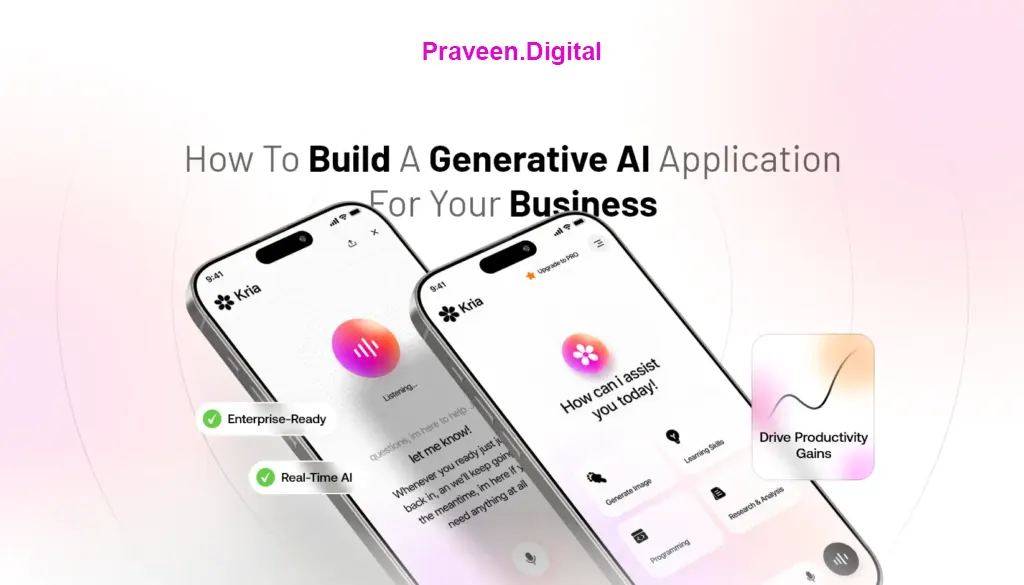
How to Build a Generative AI Application: Process, Tech Stack, Cost, and Use Cases
What You Will Learn Generative AI is no longer a future-forward concept. It is live infrastructure that businesses are using to automate operations, reduce costs, and serve customers better. If your team is wondering how to build a generative AI application without wasting months or a six-figure budget going in the wrong direction, this guide…
-

Praveen Kumar Digital Marketing – Complete Digital Growth Solutions for Modern Businesses
Praveen Kumar’s professional digital marketing and e-commerce consulting website is praveen.digital In today’s competitive online marketplace, businesses need more than just a website or advertisements to succeed. They need a complete digital growth strategy that combines branding, web development, advertising, and business management under one roof. Praveen Kumar Digital Marketing, operating through Praveen Digital, provides…
-

Freelance Digital Marketing Expert – Complete Digital Growth Solutions for Businesses Worldwide
Freelance Digital Marketing Expert for Business Growth, Lead Generation and Brand Development Finding a reliable Freelance Digital Marketing Expert can be the difference between a struggling online presence and a thriving digital business. Businesses today require more than basic advertising; they need a complete digital strategy that combines website development, search engine visibility, paid advertising,…
-
WordPress Developer: Is WordPress Really Unsafe? The Truth About Website Security in 2026
Many business owners believe that WordPress websites are easy to hack, unreliable, and less secure than websites built with React, Node.js, Laravel, PHP frameworks, or other custom technologies. This belief has existed for years, but it is often based on misinformation rather than facts. The reality is simple: WordPress itself is not the problem. Poor…
-
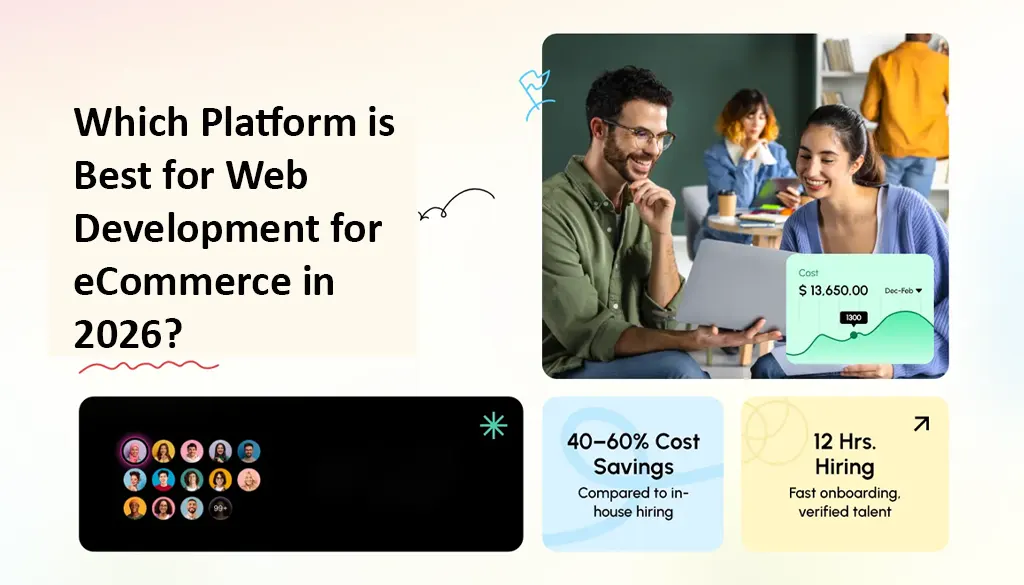
Which Platform is Best for Web Development for eCommerce in 2026?
Complete Guide to eCommerce Website Development Platforms, Costs, Technologies, and Launch Process Introduction If you’re planning to start an online business in 2026, one of the first questions you’ll ask is: “Which platform is best for web development for eCommerce?” This is one of the most searched questions on Google, Bing, Yahoo, ChatGPT, Claude, Gemini,…